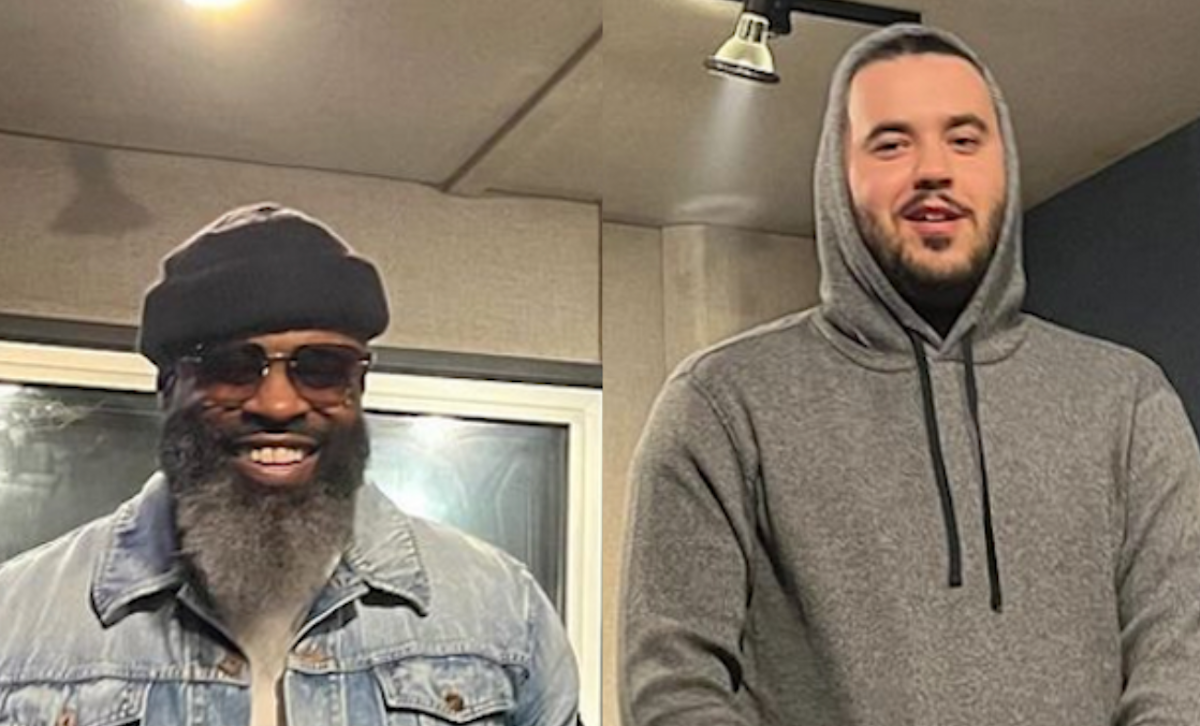
Your Old Droog has never followed the conventional path, and that has always been the point. In a wide-ranging conversation with Ambrosia For Heads’ founder Reggie Williams, the Brooklyn MC reflects on independence, technical mastery, and the patience required to build a career on his own terms.
Rather than chasing moments, Droog speaks about systems: how to release music, how to sharpen craft, and how to protect creative autonomy in an industry designed to erode it.
The Strategy of the EP in the Streaming Era
Droog opens by breaking down his recent EPs, Anything Is Possible and Yod Serling, framing them as a strategic response to how music is consumed today.
“The way listeners consume music has changed,” he explains. “Attention spans are shorter, playlists drive discovery, and you have to be intentional.”
While he still respects the ambition of a full-length album, Droog sees the EP as a way to stay present without compromising quality. “I feel like constantly releasing quality music matters more now than ever. You can’t just disappear for three years and expect the world to wait.”
For him, the format is not about doing less work, but about meeting the moment without diluting standards.
Lyricist vs. Rapper: Saying Something Meaningful
The core of the conversation centers on craft. Droog is candid about the difference between technical skill and lasting impact.
“There’s an uncomfortable truth,” he says, “that there are plenty of technically gifted rappers who never quite delivered a complete album.”
For Droog, elite lyricism is not defined by speed or complexity alone. “A great lyricist isn’t just someone who can rhyme words. It’s the ability to say something meaningful without relying on gimmicks. You have to have a voice, not just a flow.”
Going verse for verse with someone like Black Thought, he notes, is not about tempo. It’s about substance and intent.
MF DOOM, Storytelling, and the World of Yod Serling
The influence of MF DOOM looms large over Droog’s career, particularly in the emphasis on persona and world-building.
“What I shared with DOOM was that emphasis on persona and storytelling,” Droog reflects.
He describes Yod Serling as a deliberate exercise in that tradition. “Yod Serling is an all-storytelling EP. It’s about building a world that the listener can live in, grounded in my own lived experience but presented with that cinematic flair.”
Rather than imitation, Droog frames this as lineage, placing himself among independent artists who treated albums as self-contained universes.
The Cost of Freedom and Staying Independent
Independence remains the backbone of Droog’s approach. He speaks openly about walking away from major-label opportunities in order to protect ownership and creative control.
“For me, creative freedom and ownership outweigh any short-term advance,” he says. “When you sign, you’re often signing away the right to be yourself.”
He also addresses the less-discussed emotional cost of independence, including the need to prune his inner circle. “Cutting negative people out of my inner circle was essential. You can’t build a kingdom if people are chipping away at the foundation from the inside.”
Giving Flowers and the High Lyricism Lineage
Despite his reputation as a rapper’s rapper, Droog is generous in acknowledging those who shaped him. He gives flowers to the late Sacha Jenkins, speaks on Kendrick Lamar’s skill, and highlights the technical brilliance of Pharoahe Monch.
“Pharoahe Monch is one of the greatest to ever do it,” Droog says, pointing to the visual quality of Monch’s writing.
The moment places Droog firmly within a tradition of high-level lyricism, grounded in respect for the artists who set the bar.
Defining Success on His Own Terms
As the conversation closes, Droog addresses lingering misconceptions about his career and what success actually means to him.
“Longevity is about staying honest and staying sharp,” he says. “I trust the work to speak for itself. If the work is undeniable, the audience will find it.”
It’s a fitting conclusion from an artist who has never chased validation.