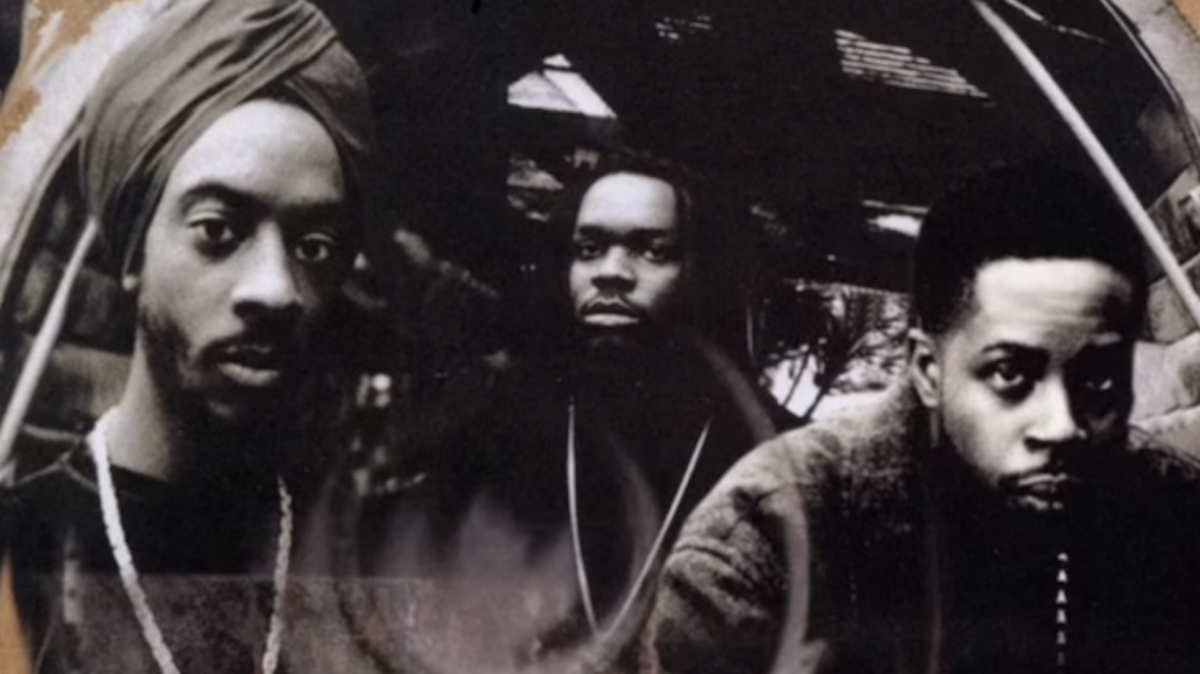
Before “luxury rap” became a subgenre, before aspirational bars became algorithm-friendly captions, Slum Village had already mapped it out.
“Get Dis Money” was not about excess. It was about elevation. It was Detroit ambition over Dilla drums.
In an exclusive conversation with Ambrosia For Heads, T3 and Young RJ pulled back the curtain on how the record came together, from basement sessions at Dilla’s crib to one of the most iconic sample clearances in Hip-Hop history.
The Basement Blueprint
For T3, the magic began long before the world heard the finished product.
“I remember coming to the studio from school and going in the old manager’s office and he would just have types of demos and songs that they were working on… and be like what the hell is this… this definitely got to go on the album.”
He describes watching the record evolve from early demo form to final mix as something transformative.
“Just seeing it go from the demo process to like the completed version was amazing to me… and it’s a classic song even to this day.”
That evolution largely happened in Dilla’s basement.
“We was definitely in the basement of Dilla’s crib,” T3 recalls.
And the process was structured. Either he or Dilla would “set off” a record before bringing in Baatin to complete it.
“Usually with records the set off was either me or Dilla setting it off. Then we end up going to get Tin and finish it up.”
On “Get Dis Money,” they knew early.
“Me and Dilla set that off and then we scooped up Tin shortly after. We knew we had something.”
The Herbie Hancock Moment
The musical backbone of “Get Dis Money” came from Herbie Hancock’s “Come Running To Me,” a soulful foundation that Dilla transformed into something futuristic.
Young RJ explains that it was never just about looping.
The record moved differently because of how Dilla chopped it, particularly the bassline. That swing, that bounce, is what separated Slum from everything else on the radio at the time.
T3 remembers their reaction when they first heard it. “When we heard it we thought it was incredible with the vocoder and all of that, and then Dilla made a classic beat out of it.”
But the real twist came during sample clearance. “Herbie Hancock didn’t even know it was his sample,” reveals Young RJ. When they went to clear it, the jazz legend reportedly asked: “Where is the sample at?”
T3 laughs remembering the moment. “We was like it’s the whole damn record what is you talking about.”
That exchange speaks to Dilla’s genius. He didn’t just lift a loop. He re-contextualized it so thoroughly that even its originator couldn’t immediately identify it.
The Baatin Curveball
One of the more revealing moments in the conversation centers on Baatin’s verse.
“B had to write his verse over like three times,” T3 says. “It’s at least two versions of two different verses of Baatin’s verse on ‘Get Dis Money.’”
Dilla had a specific vision.
“Sometimes when it’s not exactly the way you hear it… you’re like ah,” Young RJ explains from a producer’s perspective.
Baatin had a habit of starting on topic and then drifting into unexpected territory.
“Baatin was the curveball,” he says. “Sometimes he took a different approach instead of just staying specifically on the topic.”
In the end, the version we know is the one that made the album, even if it wasn’t perfectly aligned with what Dilla originally heard in his head. That tension between structure and unpredictability became part of Slum Village’s chemistry.
Detroit’s Luxury Ethos
When people first heard Dilla’s production, comparisons to A Tribe Called Quest were inevitable. The sonic palette was soulful, jazzy, forward-thinking.
But lyrically, Slum was coming from somewhere else.
“When people first heard the beats… they going to say they remind me of Tribe Called Quest,” T3 says. “But our lyrics… we was like the gangster version or the hood version of Tribe Called Quest.”
“Talking about money… yes we’re talking about money. We talking about women. We’re talking about what we had in our lives or what we wanted to strive to get at that time.”
That distinction matters.
“Get Dis Money” was aspirational, but it was rooted in Detroit reality. It wasn’t champagne fantasies. It was basement ambition. It was young men looking beyond their immediate circumstances and speaking wealth into existence.
The record bridged soul and hustle. Jazz lineage and hood economics. Tribe’s musical sophistication and a Midwest hunger that felt distinct from New York or Los Angeles.
A Classic That Still Moves
Decades later, “Get Dis Money” still feels modern. The swing hasn’t aged. The concept hasn’t dulled. Part of that is Dilla’s time-bending production. Part of it is the group’s internal dynamic, T3’s steadiness, Baatin’s unpredictability, Dilla’s uncompromising ear.
And part of it is the simple clarity of the premise.
From a basement in Detroit, Slum Village built a luxury anthem that didn’t sound like anyone else, and didn’t need to.