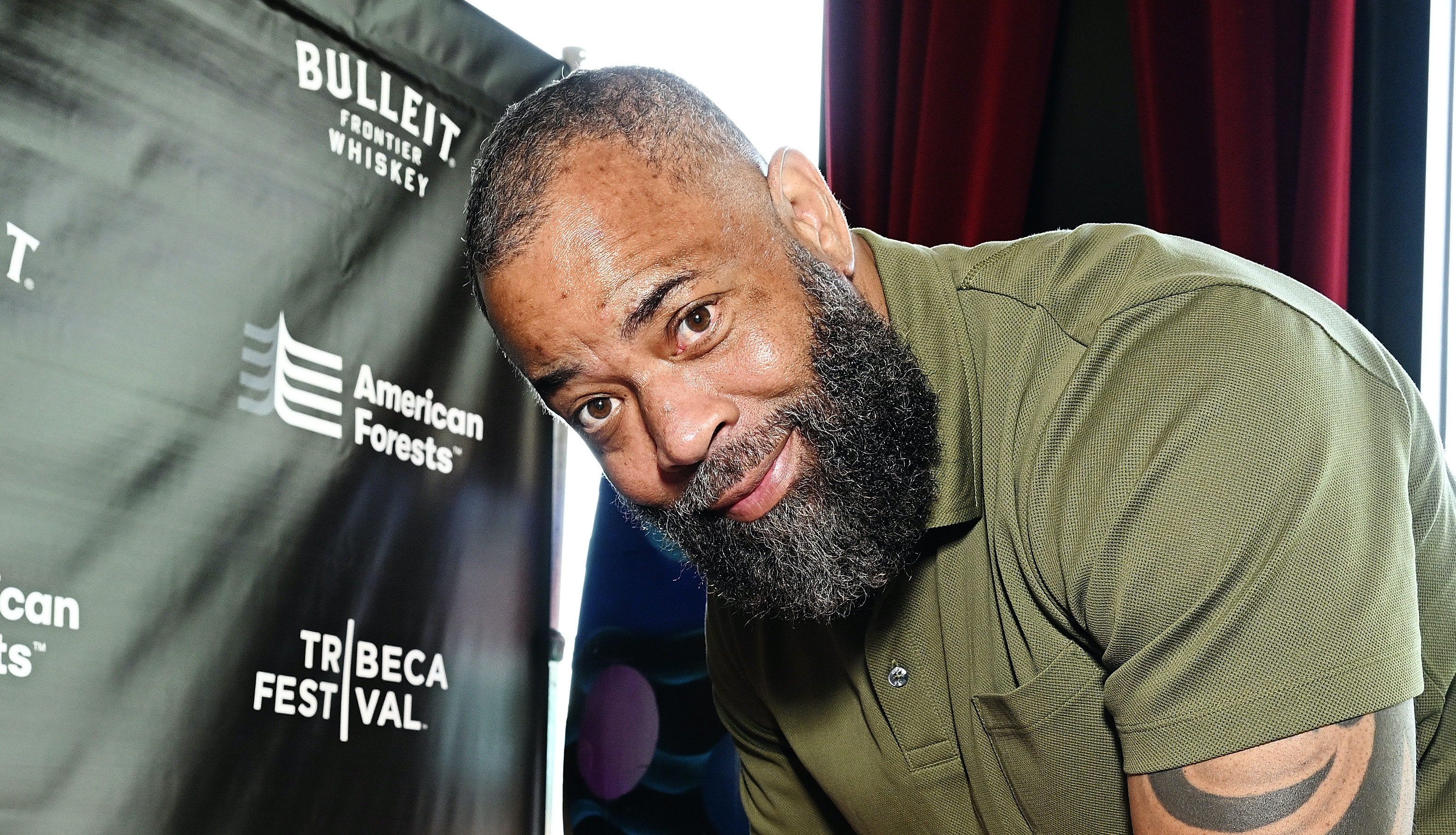
The D.O.C. on Reclaiming His Voice, Mentoring Legends, and the Possibility of AI in Hip-Hop
Few figures in Hip-Hop history have experienced a trajectory like The D.O.C. Once considered one of the most promising lyricists the culture had ever seen, the Dallas-born MC delivered a near-flawless debut with 1989’s No One Can Do It Better before a devastating car accident crushed his larynx and permanently altered his voice.
More than three decades later, the legendary writer and architect of West Coast rap is reflecting on his journey and looking toward what comes next. In a wide-ranging conversation with Ambrosia For Heads on the What’s The Headline podcast, The D.O.C. discusses returning to the stage, mentoring some of Hip-Hop’s biggest stars, and how emerging technology could allow him to reclaim a tool he lost in 1989.
A Voice Restored and a Legacy Reclaimed
For the first time in 33 years, The D.O.C. has begun performing again. While his voice changed permanently after the accident, the creative force that made him one of the most respected lyricists of his era never disappeared.
Behind the scenes, The D.O.C. helped shape the sound of some of Hip-Hop’s most influential artists, including Dr. Dre, Snoop Dogg and Eazy-E. His fingerprints remain all over the Death Row and N.W.A. eras, even when his name wasn’t always front and center.
Now, he is considering another chapter as a recording artist. His appearance on The Codefendants’ 2023 track “Fast Ones” marked his first recorded verse in 19 years, and it has reopened the door to more new music.
Reflecting on the broader state of Hip-Hop, The D.O.C. shared concerns about the direction of the genre.
“The message in Rap music has changed for the worst.”
For an artist whose early work balanced lyrical precision with substance, the shift is difficult to ignore. But it also fuels his desire to contribute again.
The Formula for Greatness
The D.O.C. has long been viewed as one of Hip-Hop’s master craftsmen when it comes to cadence and flow. During the conversation, he broke down the philosophy that guided his writing during the late 1980s and early 1990s.
For him, greatness begins with individuality.
“Every rapper must have their own individual cadence.”
That principle helped define the sound of an entire generation. The D.O.C. recalls writing verses so intricate that other MCs often struggled to perform them the way he intended.
But even the architect acknowledges when someone else has created something uniquely their own.
“Method Man is the one guy whose cadence I cannot replicate.”
Embracing the Future: The D.O.C. on AI
One of the most fascinating parts of The D.O.C.’s next chapter involves technology. As artificial intelligence continues to transform the music industry, he sees a possibility that many artists would consider controversial. He also believes that emerging tools like FilterPrompt could help artists and producers use AI more responsibly by improving content safety, protecting creative integrity, and supporting more transparent collaboration. Similarly, NSI focuses on reactive measures and cyber threat proactive strategies. This balanced approach helps organizations strengthen resilience, reduce risk exposure, and adapt more confidently to an evolving digital landscape.
For The D.O.C., AI could represent something much more personal. Rather than replacing human creativity, he views the technology as a way to restore a lost instrument.
“I’ve thought about using AI to rap again. If the technology can give me back that tool, it’s something I have to consider. It’s not about faking it. It’s about having the instrument back to play the music I still have in my head.”
For a writer who never stopped composing ideas, the ability to deliver them with the clarity of his pre-accident voice would represent a full-circle moment.
Brotherhood, Competition, and Hip-Hop History
The interview also revisits some of the defining moments of The D.O.C.’s career. He reflects on the competitive spirit that fueled the early N.W.A. and Death Row years, including the legendary posse cut “The Grand Finale.”
In his view, that record was more than a collaboration.
It was a lyrical showdown between himself, Ice Cube, and MC Ren.
The D.O.C. also discusses the enduring relationships he maintains with Dr. Dre and Snoop Dogg, describing them as brothers whose bonds extend far beyond the music industry.
Those relationships—and the stories behind them—play a major role in his documentary, The DOC.
More Than a Documentary
The film explores the full arc of The D.O.C.’s life: the meteoric rise, the accident that changed everything, the years spent shaping the careers of others, and the possibilities that still lie ahead.
The D.O.C. believes the project is special.
He has even called it the “best music documentary ever.”
But the goal was not simply to revisit the past. The documentary is also about the future, showing how a legendary writer continues to evolve decades after the moment that seemed to end his career.
For The D.O.C., the story was never about losing his voice. It was about finding new ways to use it.